
In eCommerce, especially within sports and fitness retail, reviews play a major role in performance on Google Shopping. Strong reviews improve trust, click-through rates, and conversion. A common question for merchandising teams is whether reviews from a parent product can be shown on child products as well and more importantly, whether doing so risks a Google penalty.
This case study explains how Google treats parent child reviews, using a simple sports retail example.
The Scenario: A Common Sports eCommerce Setup
Imagine an online store selling a Nike Pro Training T-Shirt. The product exists as one main item, with multiple variations. Customers can buy the same t-shirt in different colours and sizes, such as black in medium, blue in large, or red in small.
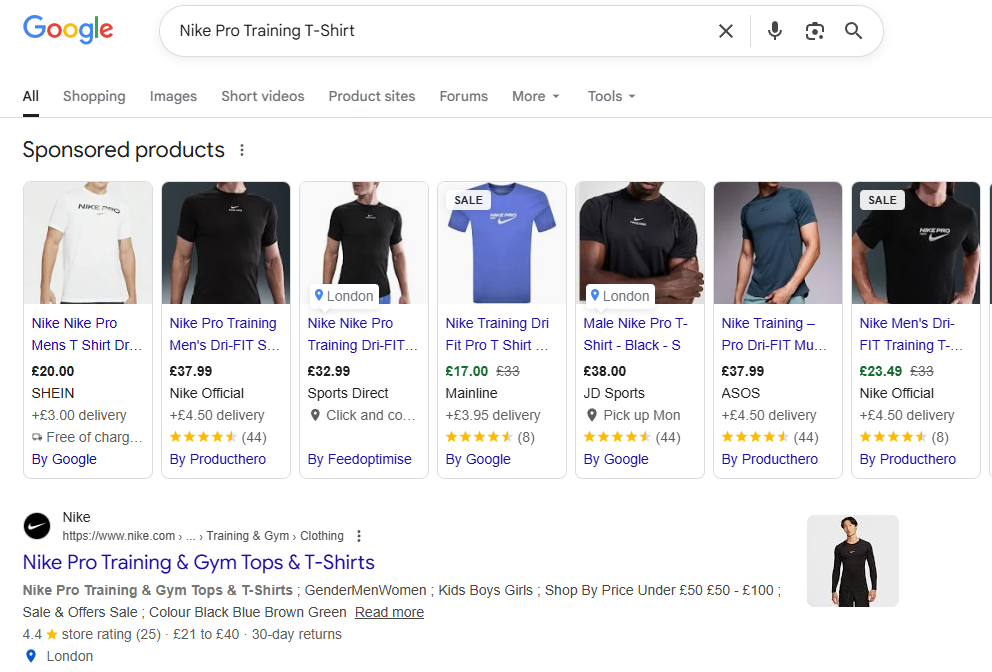
From a shopper’s perspective, the product experience is identical. The fabric, fit, breathability, and performance during workouts remain the same regardless of colour or size. Only the variant attributes change.
The business question is simple: can reviews collected at the parent level be displayed on each child variant in Google Shopping?
How Google Views Review Sharing for Variants
Google allows reviews to be shared between parent and child products when the variants are genuinely the same product. If the only differences are non-functional attributes like size or colour, Google considers the reviews to be relevant across all variants.
For example, a customer review stating that the t-shirt is comfortable, breathable, and ideal for training accurately describes the experience of every colour and size variation. In this situation, Google does not see review sharing as misleading.
When implemented correctly through structured product feeds or review aggregation, both the parent product and its child variants can show the same reviews in Google Shopping without penalty.
Where Review Sharing Becomes Risky
Problems arise when reviews are shared between products that are not functionally the same. In sports retail, this often happens with weights, sizes that affect performance, or different product builds.
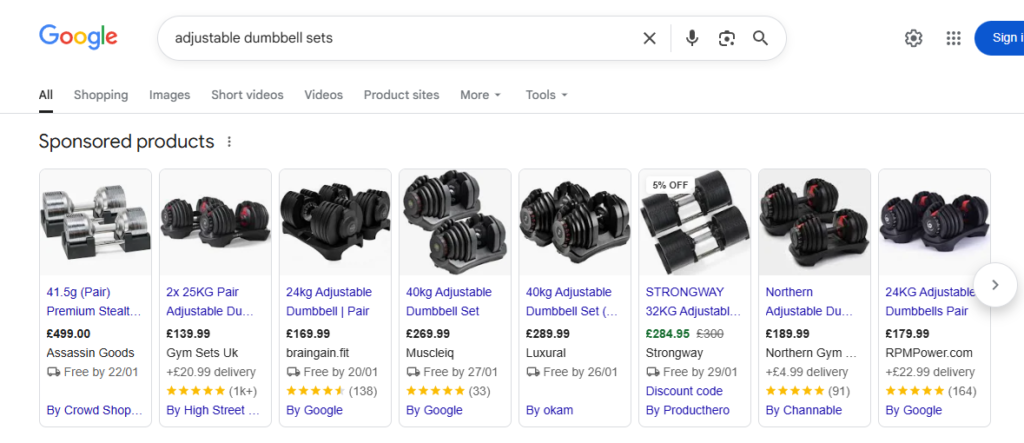
Consider a retailer selling adjustable dumbbell sets. The parent product represents the range, while child products include 10kg, 20kg, and 30kg versions. A review praising the stability of heavy lifts or advanced strength training would not accurately apply to the 10kg version.
If those reviews are shown across all variants, Google may see this as misleading shoppers. This can result in product disapprovals, reduced visibility in Google Shopping, or a decline in trust signals.
Why Google Cares About This
Google’s main concern is shopper experience. Reviews must reflect what a customer will actually receive. When reviews exaggerate or misrepresent performance due to incorrect sharing, Google treats this as a policy violation rather than a technical mistake.
This is why review sharing is acceptable for visual or sizing differences, but not for changes that affect how a product performs or is used.
The Correct Way to Handle Reviews in Sports eCommerce
For sports retailers, the safest approach is to treat parent and child products as one review group only when the core product remains unchanged. Apparel, footwear in the same model, and accessories with cosmetic differences are usually safe.
Products where weight, resistance, material, or functionality changes should collect and display reviews separately. This ensures accuracy, protects feed health, and maintains long-term Google Shopping performance.
Google will not penalize review sharing between parent and child products when those products are true variants of the same item. However, sharing reviews across different performance levels or specifications can lead to penalties and reduced visibility.
The rule is simple: if a customer would have the same experience regardless of the variant chosen, reviews can be shared. If the experience changes, reviews should not.