
Case Study: Style & Home Co. – A Sofa Company
- Budget: £50,000 / month
- Catalog: 500 SKUs (Furniture, Decor, Kitchenware)
- Goal: Profitability (ROAS) and New Customer Acquisition.
1. The Best Bidding Strategy: tROAS vs. Portfolio tROAS
For a £50k monthly spend, you have enough data to be aggressive, but you need stability.
Winner: Portfolio tROAS (Target Return on Ad Spend) without strict Bid Caps.
- Why Portfolio? With 500 SKUs, some categories (e.g., “Vases”) may get fewer conversions than others (e.g., “Sofas”). A Portfolio Strategy groups them together, sharing data so the algorithm learns faster across the whole account.
- The “Bid Cap” Trap: Strict bid caps can strangle Smart Bidding. Use a Maximum Bid Limit only as a “safety net” (e.g., 3 – 4x your average CPC) to prevent extreme outliers, but do not set it low enough to restrict performance.
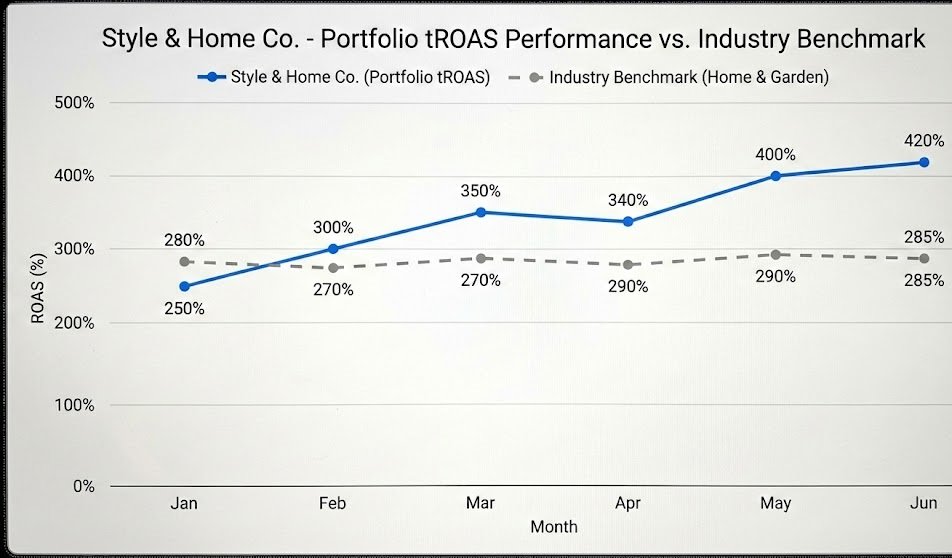
The graph below illustrates how this strategy typically performs against an industry benchmark over time, with the portfolio strategy learning and eventually outperforming the market.
2. Campaign Segmentation & Structure
With 500 SKUs, segment by Product Performance and Margin, not just category. This image shows how the campaign structure would look in your Google Ads dashboard.
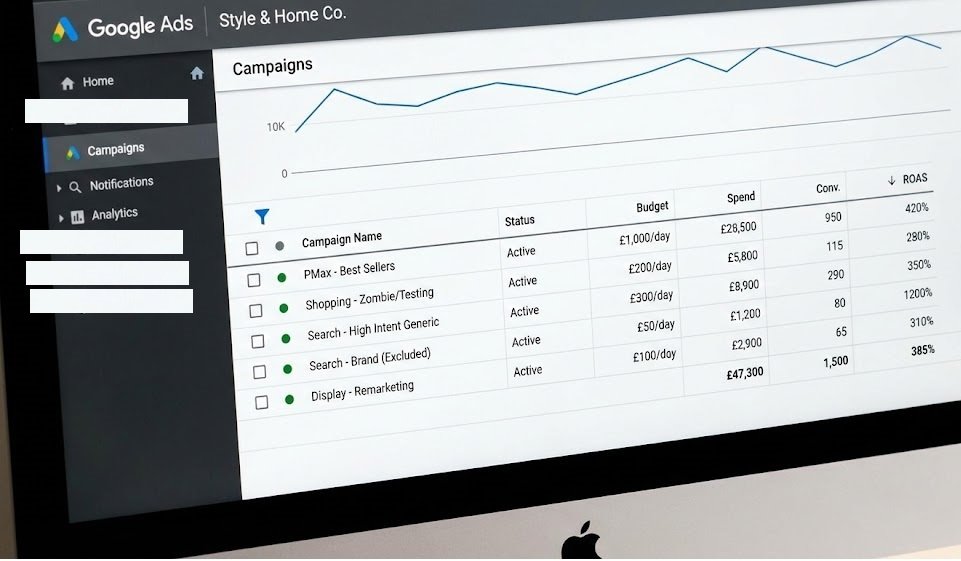
- Campaign 1: Best Sellers (PMax) for your top 20% of revenue-driving products.
- Campaign 2: Zombie / Testing (Standard Shopping) for the other 400 SKUs to “fish” for cheap traffic.
3. Search Campaign Structure
- Structure: “Hagakure” Method (Consolidated Structure). Focus on high-intent keywords in fewer, broader ad groups. Keywords Buy Sofa Online , Sofa Online etc
- Dynamic Search Ads (DSA): Create one DSA campaign to catch all the “long-tail” searches you might miss.
4. Brand Campaign Strategy
Yes, you must exclude Brand from other campaigns. If you don’t, PMax will spend your budget bidding on your own name, inflating your results while failing to find new customers.
- The “Brand Jail”: Create a dedicated Standard Shopping Campaign for brand terms only, using negative keywords to exclude generic traffic.
- The Exclusion: Add your Brand Name as a Negative Keyword in all other campaigns.
5. Remarketing Strategy
With PMax, traditional remarketing is less necessary, but for £50k spend, you need a specific “closer” strategy.
- Dynamic Remarketing (Display): Target users who viewed a product but didn’t add to cart.
- Cart Abandoners (YouTube/Discovery): Target users who added to cart but didn’t purchase with a trust-building creative.
6. Audience Strategy
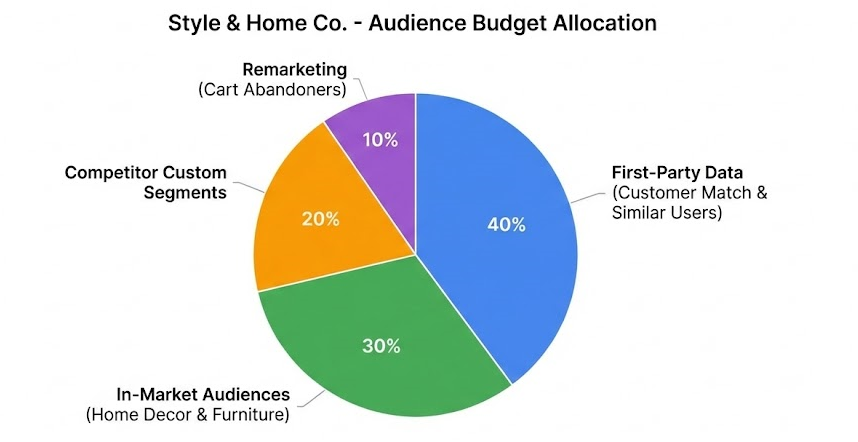
For a £50k spend, relying solely on “broad” targeting is risky. Layer audiences onto your campaigns. The chart below shows a recommended budget allocation across these segments.
7. Display Campaign Structure
Don’t over-invest here unless your Search/Shopping is maxed out. Display is for awareness. Focus on Contextual, Affinity, and Remarketing ad groups.
8. Advanced AI Image Strategy
Use Generative AI to create “Lifestyle Context” for your 500 SKUs without a photoshoot. This is a powerful way to increase CTR on visual platforms like YouTube and Discover.
- Workflow: Take your “White Background” product image and use AI to “Outpaint” or “Generate Background” to place it in a realistic scene.
The image below demonstrates this powerful “before and after” transformation.

Summary Checklist
- Switch to Portfolio tROAS (Unified learning).
- Split Shopping: Best Sellers (PMax) vs. Everything Else (Standard).
- · Brand Exclusions: Force PMax to hunt for new customers, not existing ones.
- · AI Creative: Replace white-background ads on social/display with AI-generated lifestyle scenes.